Mattresses without zones are becoming increasingly popular with people who value simple construction and consistent support. While the market is dominated by complex zone systems with five, seven, or even nine different firmness levels, single-zone mattresses offer a deliberately minimalist alternative. This choice for simplicity can have both advantages and disadvantages, depending on individual sleeping habits, body type, and health needs.
Choosing the right mattress not only affects comfort but also sleep quality and, in the long term, the health of the musculoskeletal system. While zoned systems are theoretically designed to offer targeted support for different areas of the body, the question remains whether this complexity actually provides measurable benefits or whether a high-quality, single-zone mattress guarantees sufficient sleeping comfort.
Zone-free mattress: The key points
What are mattresses without zones?
A mattress without zones has a uniform material composition and firmness across its entire sleeping surface. [1] Unlike zone systems, which provide different areas for the head, shoulders, hips, and feet with varying degrees of firmness, a single-zone mattress offers the same support and resilience throughout.
This design follows the principle of even pressure distribution. The body is not forced into a specific position by different zones, but can naturally adapt to the uniform surface. Especially with modern materials such as viscoelastic foam or high-quality innerspring constructions, this can lead to balanced body support without the need for complex zoning.
These mattresses are often made with high-quality materials that offer natural adaptability. Memory foam, for example, reacts to body heat and weight, adapting individually to body contours without the need for predefined zones.
Advantages of mattresses without zones
Universal fit
The greatest advantage lies in its universal applicability. People of different heights and weights can use the same mattress without any zones being less than optimally positioned. This is particularly relevant when partners with significantly different body sizes share a bed.
Flexibility in sleeping positions
Those who frequently change sleeping positions or move around a lot at night benefit from even support. Zoned mattresses are often optimized for a specific sleeping position – usually the side position. A single-zone mattress, on the other hand, offers the same basic support in every position.
Simpler construction and maintenance
The uniform material structure often makes such mattresses more robust and durable. There are no differently stressed zones that could wear out at different rates. Turning or rotating the mattress is also easy, as no specific orientation needs to be considered.
Cost advantage
Mattresses without complex zoning are generally cheaper to manufacture and are therefore often offered at more attractive prices. The money saved can be invested in higher-quality materials.
Disadvantages and limitations
Less targeted support
The most obvious disadvantage is the lack of targeted support for specific body regions. [2] People with pronounced spinal problems or very uneven weight distribution could benefit from the different firmness zones of a zoned mattress.
Possible pressure points
Without softer zones for the shoulders and hips, side sleepers can develop pressure points, especially if the mattress is too firm. This can lead to circulatory problems or muscle tension.
Less individualization
The ability to adapt to very specific physical needs is limited. What works for most people may not be optimal for individuals with particular anatomical conditions or health limitations.
Expert View „Mattresses without zones can certainly be a good choice, especially for people who change sleeping positions. The quality of the base material and its adaptation to individual needs are crucial.“
Who are non-zoned mattresses suitable for?
Frequent position changers
People who frequently change their sleeping position at night benefit from the consistent support. They don’t have to worry about whether they are lying in the «right» zone.
Couples with different body sizes
If partners have very different body sizes or weights, a single-zone mattress often works better than a zoned mattress, where the zones are optimally positioned for only one partner.
Budget-conscious buyers
Those with a limited budget who do not want to compromise on quality can often get more for their money with a high-quality mattress without zones than with a cheaper zoned mattress.
Minimalist sleepers
People who value simplicity and are skeptical of complex marketing promises often find a more honest solution in single-zone mattresses.
Buying advice: What to look out for?
Material quality is paramount.
Since the mattress has no zones, the quality of the base material is even more important. Invest in high-quality foams, spring cores, or natural materials that offer good adaptability and durability.
Choose the hardness level carefully
Without softer zones for the shoulders and hips, choosing the right firmness level is crucial. [3] Generally, the mattress should be chosen to be slightly softer than with a zoned system to avoid pressure points.
Make ample use of the test lying position
Make extensive use of trial sleep offers. Since a single-zone mattress offers fewer adjustment options, it’s more important to ensure it’s a good fit.
Consider complementary solutions
If necessary, toppers or pads can be used to customize specific areas. This can be more flexible than permanently integrated zones.
Safety Tip
Common misunderstandings
Zoning is not automatically better.
Many consumers assume that more zones are automatically better. In fact, too many or poorly positioned zones can even be counterproductive. Community experience shows that three zones are often sufficient, and five or seven zones primarily serve marketing purposes.
DIY solutions can be more effective
Interestingly, some people achieve better results with targeted additions, such as firmer pads in the hip area, than with pre-made zone systems. This shows that individual adjustments are often more important than standard zoning.
Note: These statements are based on user reports and are not supported by clinical studies.
Durability through simplicity
Contrary to the assumption that more complex systems are more durable, experience shows that simple, well-made mattresses often last longer. Different materials in different zones can fatigue at different rates and lead to uneven wear.
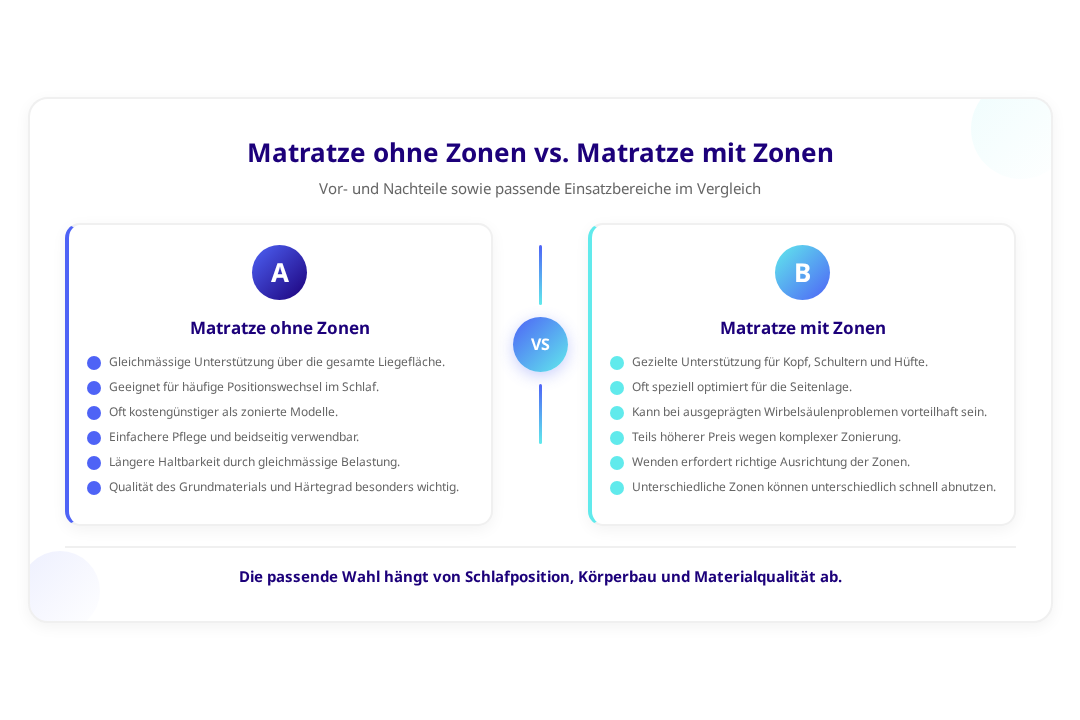
Comparison: Mattress with vs. without zones
| criterion | With zones | Without zones
|
|---|---|---|
| Body adaptation | Targeted for specific body areas | Evenly across the entire area |
| Sleeping position | Optimized for side sleeping position | Suitable for changing positions |
| maintenance | Complex (zone orientation) | Simple (usable on both sides) |
| Price | Often higher | Tendency towards cheaper |
Additional measures for optimal sleeping comfort
Slatted frame adjustment
An adjustable slatted bed base can help compensate for the lack of zoning in the mattress. A firmer setting can be particularly beneficial in the pelvic area.
Topper as a flexible solution
Even the best mattress only reaches its full potential when combined with a well-balanced sleep environment. Factors such as the slatted frame, mattress topper, pillows, and room climate significantly contribute to whether the body can truly relax at night. Anyone wanting to improve their sleep quality holistically should consider these elements within the context of general sleep hygiene – helpful guidance can be found in practical sleep hygiene tips that take into account not only mattress choice but also positioning, sleep routine, and environment. [4]
Don’t neglect pillow ergonomics
With a single-zone mattress, proper head and neck support becomes even more important. Invest in an ergonomic pillow that suits the mattress and your sleeping habits.
Price-performance ratio and market overview
The Swiss mattress market offers a wide range of single-zone mattresses in various price categories. Entry-level models made of comfort foam are available from CHF 300-500, while high-quality versions made of natural latex or premium innerspring systems can cost CHF 800-1500.
It’s important to note that with single-zone mattresses, the budget saved on complex zoning can be invested in better base materials. A CHF 600 mattress without zones can certainly offer the same quality as a CHF 900 zoned mattress, simply because the manufacturing costs are lower.
Online retailers have significantly influenced the market and often offer attractive trial sleep guarantees of 90-365 days. This is particularly valuable for single-zone mattresses, as the adjustment period is more important than with more flexible zone systems.
When to seek medical advice?
How we at Sleep Lab can help
Sleep problems can have many causes, and the mattress is not always the deciding factor. [5] If you continue to sleep poorly despite a new, well-chosen mattress, there may be underlying sleep disorders.
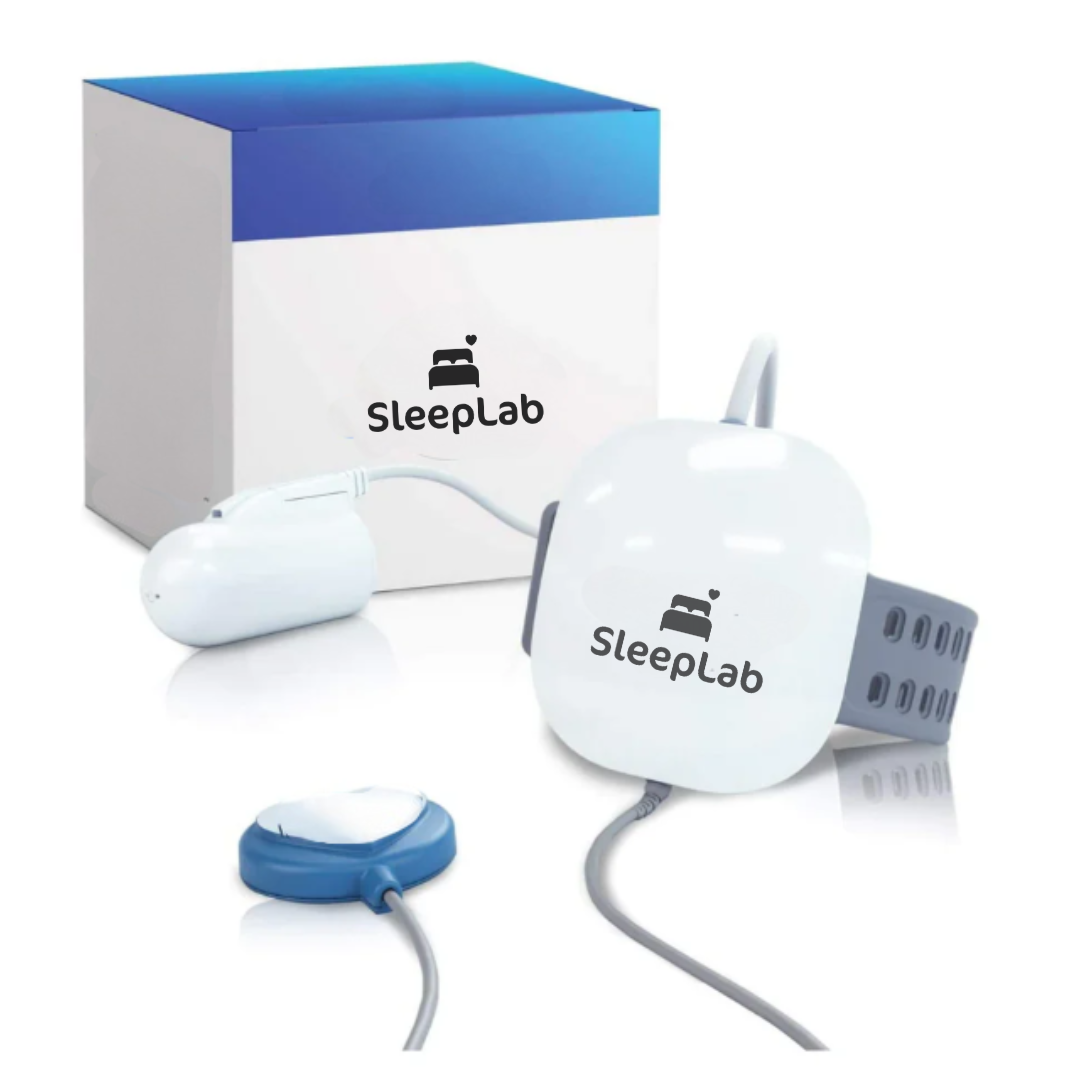
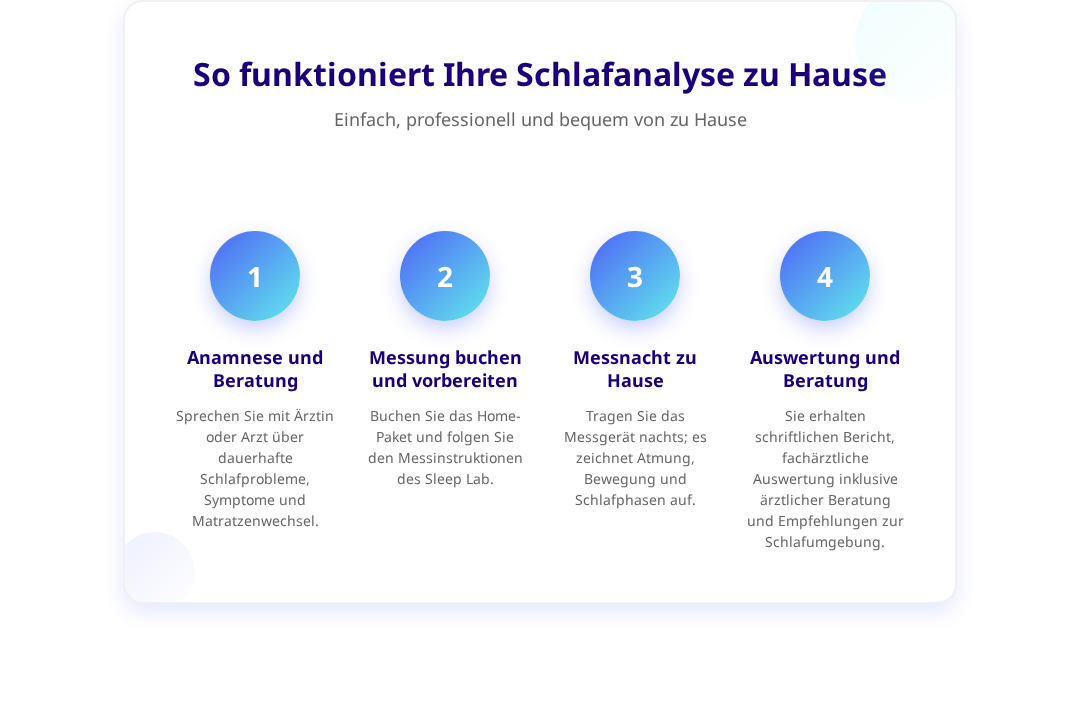
Our digital sleep lab allows for a comprehensive analysis of your sleep quality from the comfort of your own home. Using state-of-the-art technology, we record important parameters such as breathing, movement, and sleep phases, without requiring you to visit a clinic.
The basic package for CHF 270 includes a detailed online diagnosis with a written report. For CHF 290, you also receive a specialist medical evaluation of your measurements. The complete package for CHF 390 also includes a 30-minute consultation with a specialist, during which individual therapy options are discussed.
This way you can ensure that sleep problems are not caused by undetected disorders such as sleep apnea or restless legs syndrome before making further investments in mattresses or other sleep aids.
FAQ
Are mattresses without zones suitable for side sleepers?
Yes, if the firmness level is chosen correctly. Side sleepers should generally opt for slightly softer, single-zone mattresses to avoid pressure points on the shoulders and hips. High-quality materials like memory foam adapt well to body contours even without zones.
How can I tell if a single-zone mattress is too firm for me?
Signs include morning stiffness, numbness in the arms or legs, or the feeling of lying «on» rather than «in» the mattress. Frequent tossing and turning can also indicate a mattress that is too firm.
Can I adjust a mattress without zones afterwards?
Yes, toppers, pads, or targeted placement of firmer pads allow you to modify specific areas later. This is often more flexible than pre-made zones, as it can be individually adjusted.
How long do mattresses without zones last compared to zoned mattresses?
They often last longer because they are subjected to more even wear and tear and do not have material zones that fatigue at different rates. With proper care and regular turning, high-quality single-zone mattresses can last 8-12 years.
What firmness level is recommended for a mattress without zones?
This depends on body weight, sleeping position, and personal preference. As a guideline: up to 60 kg, a softer mattress (H2) is recommended; 60-80 kg, a medium mattress (H2-H3); and over 80 kg, a firmer mattress (H3). If you are unsure, you should take full advantage of the trial period.