A sudden, sharp pain in your lower back strikes you out of the blue, making every movement excruciating. Finding the right sleeping position becomes a particular challenge at night. While your body needs rest and recovery, the pain often prevents restful sleep. The good news is that with the right sleeping positions and targeted measures, you can significantly alleviate your symptoms and support the healing process.
Lower Back Pain and Sleep: The Most Important Information at a Glance
What happens in the body during a slipped disc?
A slipped disc, medically known as lumbago, is an acute blockage of the lumbar spine. The cause usually lies in tense or hardened muscles that contract reflexively and thereby irritate nerve roots. This muscle spasm often results from abrupt movements, incorrect lifting techniques, or pre-existing back problems.
During the night, the symptoms often worsen because the body exerts different pressure on the spine while lying down. At the same time, the body’s pain tolerance decreases in the evening, making the pain feel more intense. This creates a vicious cycle: pain impairs sleep quality, and poor sleep delays healing.
The optimal sleeping positions for lumbago
Side-lying position: The gentlest position
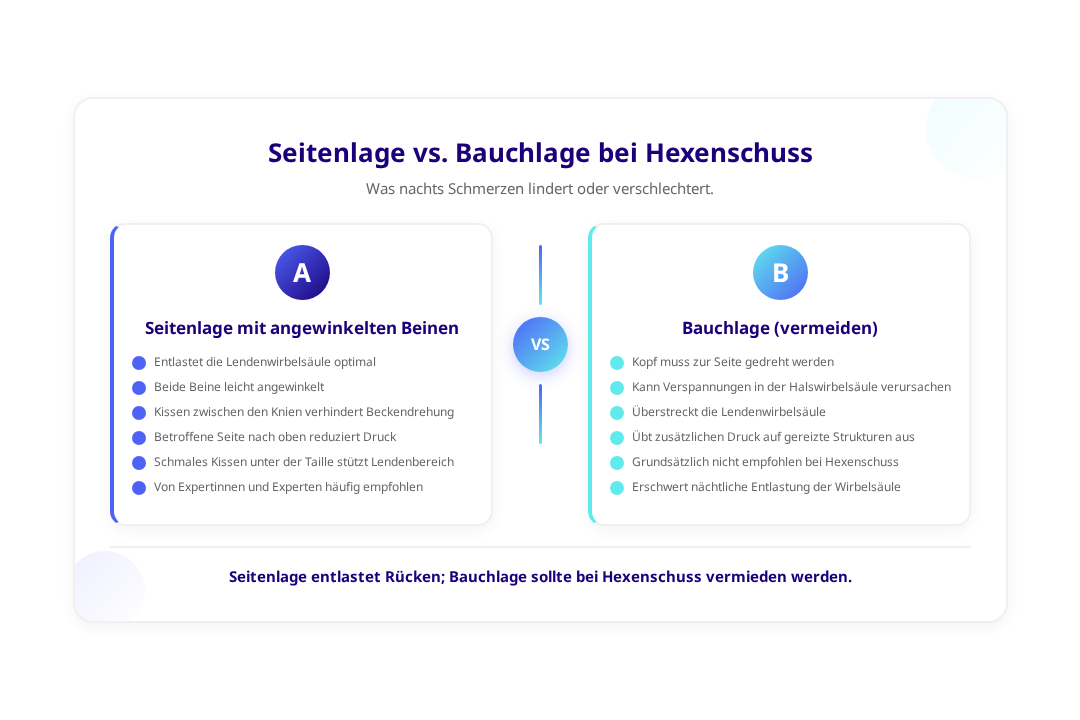
The side-lying position is considered the best sleeping position for lumbago [1] . Lie on your side and bend both legs slightly, as if you were in the fetal position. This position optimally relieves pressure on the lumbar spine, as the natural S-curve of the spine is maintained.
Place a pillow between your knees to keep your hips parallel and prevent your pelvis from twisting. The affected side should face upwards to avoid putting extra pressure on it. A narrow pillow under your waist can provide additional support for the lumbar curve.
Supine position with support
If you usually sleep on your back, you can maintain this position, but you should ensure adequate support. Place a pillow or neck roll under your knees to slightly bend your legs. This significantly reduces the strain on your lumbar spine.
Additionally, a thin towel, rolled up and placed under the natural curve of the lumbar spine, can provide further relief. Make sure your head is not positioned too high to avoid tension in the neck area.
Why you should avoid lying on your stomach
Lying on your stomach is counterproductive in cases of lumbago [2] . In this position, the head has to be turned to the side, which leads to tension in the cervical spine. At the same time, the natural curvature of the lumbar spine is hyperextended, which puts additional pressure on the already irritated structures.
Expert View „In cases of acute lumbago, the correct sleeping position is crucial for the healing process. Many patients underestimate how much relieving pressure on the spine at night contributes to pain relief.“
The right mattress and the right pillow
A mattress that is too soft allows the body to sink in and can exacerbate spinal misalignment. Conversely, a surface that is too firm does not provide sufficient pressure relief for painful areas. Ideally, a medium-firm mattress should conform to the body’s contours without giving way.
If you don’t want to buy a new mattress, a temporary solution can help: Place a board under a mattress that’s too soft or use a mattress protector with a firmer surface. The pillow should support the natural curve of the neck without raising the head too much or causing it to bend at an angle.
This pragmatic approach is a commonly used interim solution, but it is not supported by clinical studies.
Additional measures for better sleep
Heat treatment before bedtime
Heat relaxes tense muscles and can relieve pain before bedtime [3] . A warm bath, a hot water bottle, or a heating pad applied to the affected area can work wonders. Be sure not to use the heat source for more than 20 minutes and to protect the skin from overheating.
Relaxation exercises in bed
Gentle stretching exercises can help loosen the muscles. While lying on your back, gently pull both knees towards your chest, or while lying on your side, carefully lower your knees towards your stomach. These movements should never increase pain.
Breathing and meditation
Deep breathing exercises activate the parasympathetic nervous system and promote relaxation. Focus on slow inhalation and exhalation while consciously relaxing individual muscle groups.
Safety Tip
The influence of medication on sleep
Painkillers can provide short-term relief by making the night more bearable and enabling essential sleep [4] . Anti-inflammatory drugs such as ibuprofen or diclofenac not only relieve pain but also reduce swelling in the affected tissue.
Muscle relaxants can be helpful for severe muscle tension, but should only be taken as prescribed by a doctor. Keep in mind that some painkillers can disrupt sleep, while others cause drowsiness. Discuss the optimal time to take them with your doctor.
Long-term strategies against recurring symptoms
While acute measures alleviate immediate pain, you should focus on long-term prevention. Regular exercise strengthens the back muscles and improves spinal flexibility. Swimming, yoga, or specialized back exercises can help.
Ergonomic improvements in the workplace reduce strain throughout the day. A good office chair, the correct screen height, and regular breaks to stand up and stretch are important preventative measures.
Such ergonomic adjustments can vary from person to person and should ideally be discussed with a specialist (e.g., occupational therapist or general practitioner).
Sleep quality as a healing factor
Restful sleep is essential for the body’s regeneration [5]. During deep sleep phases, growth hormones are released, which promote the repair of muscle and connective tissue, while inflammatory markers in the blood decrease. In addition to the right sleeping position, basic habits also play an important role – those who want to actively support their nightly recovery benefit from practical sleep hygiene tips such as a suitable sleep environment, regular sleep times, and conscious evening routines.
Poor sleep quality can exacerbate chronic pain and worsen pain perception. Studies show that people with sleep disorders are more likely to suffer from back pain and respond less well to treatment.
When to seek medical advice?
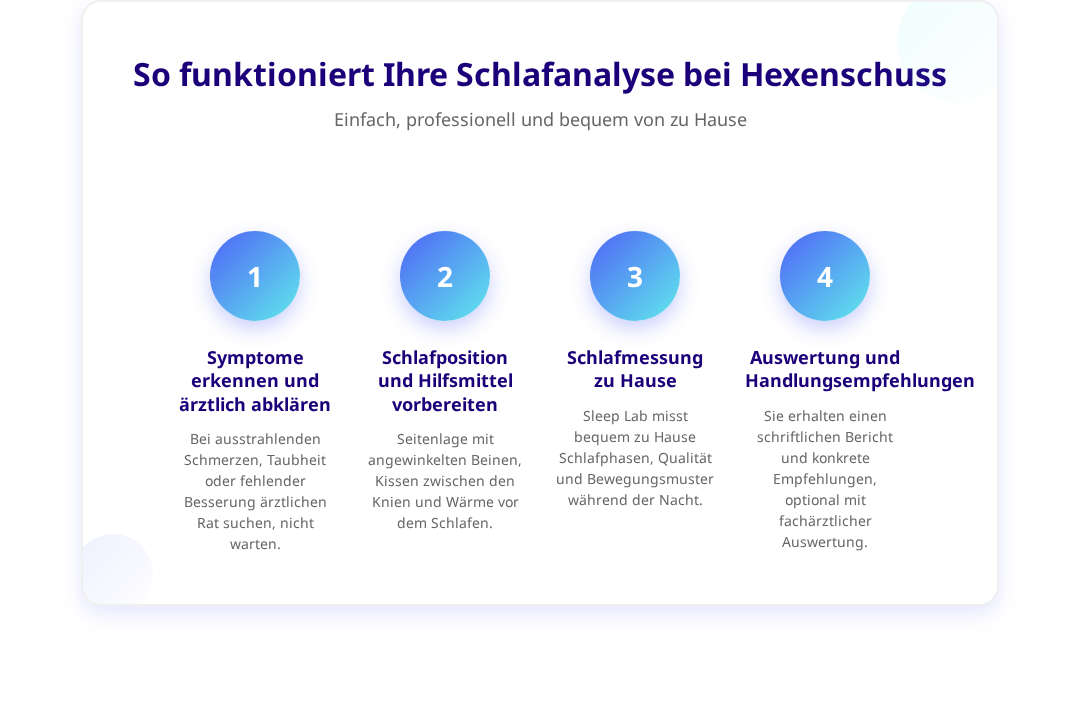
How Sleep Lab can help you with sleep-related problems
If back pain or other ailments regularly disrupt your sleep [6] , a professional sleep analysis can provide important insights. Sleep Lab offers you the opportunity to conduct a comprehensive sleep measurement in the comfort of your own home, without the stress of a hospital stay.
Our analysis records not only sleep phases and sleep quality, but also movement patterns during the night. This can help you understand whether and how your sleeping position affects your symptoms. With a detailed written report and, optionally, a specialist medical evaluation, you will receive specific recommendations for better sleep.
Ein erholsamer Schlaf hängt nicht nur von Gewohnheiten oder körperlichen Faktoren ab, sondern auch von der Qualität der Schlafunterlage. Wer seine Schlafsituation ganzheitlich verbessern möchte, kann sich zusätzlich einen Überblick über moderne Matratzenlösungen verschaffen – etwa in der Technogel Matratzen Bewertung für gezielte Druckentlastung, der Hasena Matratzen Bewertung mit Fokus auf ergonomische Unterstützung oder der Happy Matratzen Bewertung für ausgewogenen Schlafkomfort. Die passende Matratze kann dabei helfen, nächtliche Unruhe zu reduzieren und die Regeneration im Schlaf zu unterstützen.
FAQ
Which sleeping position is the most comfortable for lumbago?
The side-lying position with slightly bent legs is ideal. A pillow between the knees keeps the spine in a natural position and prevents twisting.
Can I sleep on my back if I have lumbago?
Yes, lying on your back is possible with a pillow under your knees. This relieves pressure on the lumbar spine and can even be more comfortable for some people than lying on their side.
Why do the pains worsen at night?
At night, the body’s pain tolerance decreases and anti-inflammatory hormones are less active. Additionally, prolonged lying down leads to muscle stiffness.
Do hot water bottles help with lumbago in bed?
Yes, heat relaxes tense muscles and can relieve pain. However, only use it before bed and not throughout the night.
When should I see a doctor if I have lumbago?
If you experience radiating pain into the leg, numbness, no improvement after 72 hours, or additional symptoms such as fever, you should seek medical advice.