Breathing rate during sleep is an important indicator of the quality of our nightly rest. While we sleep, our breathing rhythm naturally changes. But when are these changes normal, and when should they cause concern? More and more people are using fitness trackers and smartwatches to monitor their sleep parameters – but how reliable are these measurements really?
Respiratory rate during sleep: The most important points at a glance
Normal breathing rate during sleep
Our breathing naturally slows down during sleep. While we take about 12-20 breaths per minute during the day, this number typically drops to 12-16 breaths per minute at night. [1] This slowdown is a normal part of the relaxation process as our body enters rest mode.
Breathing rate also varies between the different sleep stages. During deep sleep, breathing is most regular and slowest, while it can become more irregular during REM sleep (dream sleep). These natural fluctuations are completely normal and reflect the complex processes in our brain during the different sleep stages.
Individual factors such as age, fitness level, and health can also influence normal breathing rate. Trained individuals often have a lower resting breathing rate, while older people or those with certain medical conditions may exhibit different values.
When does the breathing rate during sleep become a cause for concern?
Respiratory rates that are consistently above 20 breaths per minute may indicate underlying problems. [2] It is particularly concerning if elevated respiratory rates are accompanied by other symptoms, such as oxygen saturation levels below 90 percent.
Anecdotal reports indicate that some people experience nighttime peaks of 24 breaths per minute or more, sometimes accompanied by oxygen levels dropping to 80 percent. Such combinations can be indicative of sleep-related breathing disorders such as sleep apnea.
Other warning signs include irregular breathing patterns, longer pauses in breathing, or the feeling of not being rested despite sufficient sleep. Loud snoring, frequent awakenings during the night, or dry mouth in the morning can also indicate breathing problems during sleep.
Expert View „Respiratory rate during sleep provides us with important clues about sleep quality and possible breathing disorders. While consumer wearables can provide initial indications, professional sleep monitoring is essential for a precise diagnosis.“ – SleepLab Redaktion
Measurement accuracy of fitness trackers and smartwatches
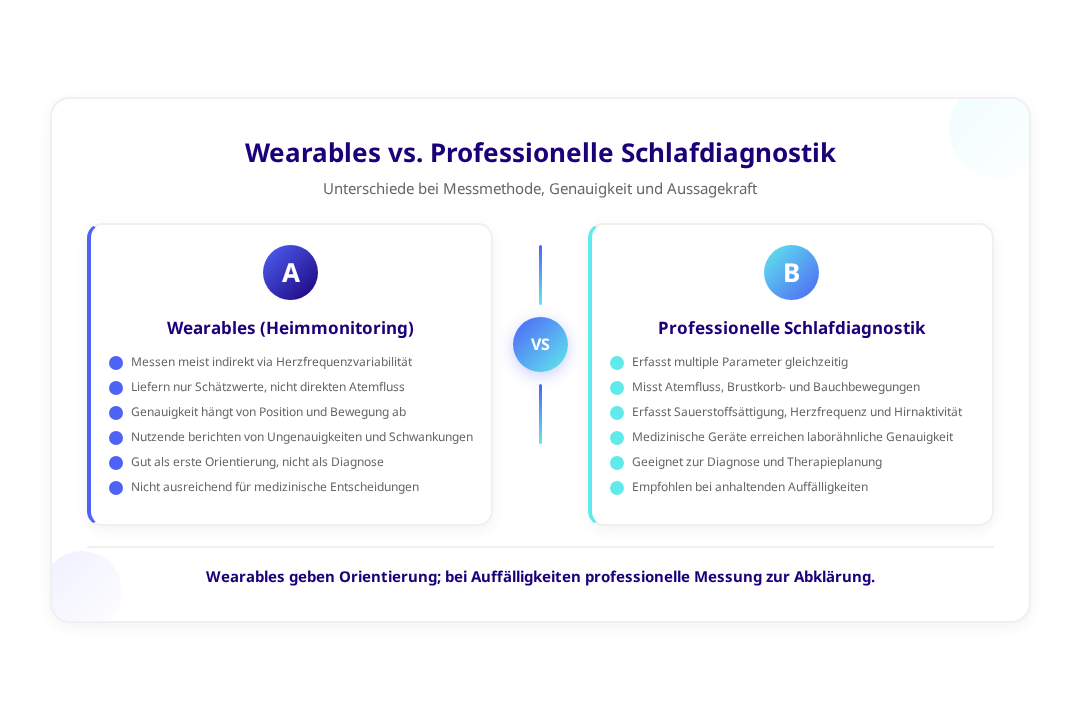
Many modern wearables promise to measure breathing rate during sleep. But how does that actually work? Most devices use indirect measurement methods, primarily heart rate variability (HRV) analysis. This detects small fluctuations in heart rhythm caused by breathing. [3]
However, this method has its limitations. Accuracy depends heavily on factors such as correct device positioning, movement during sleep, and individual physiological differences. Users report inaccuracies and fluctuations in the readings, leading to uncertainty about the reliability of the data.
Compared to direct airflow measurements, as used in professional sleep studies, consumer wearables can only provide estimates. Therefore, these devices are insufficient for medical decisions or in cases of serious suspected sleep disorders.
Safety Tip
Causes of altered breathing rate during sleep
Several factors can lead to changes in breathing rate during sleep. Sleep apnea is one of the most common causes of irregular and increased breathing rates. [4] In this condition, breathing repeatedly stops, to which the body responds with compensatory faster breathing.
Other medical conditions can also affect nighttime breathing. Heart failure, lung diseases, obesity, or neurological disorders can all lead to altered breathing patterns. Sometimes, medications or substances like alcohol are also the cause of disrupted breathing during sleep.
Environmental factors also play a role. Poor indoor air quality, excessively high or low temperatures, allergens, or an unfavorable sleeping position can influence breathing rate. Psychological factors such as stress or anxiety can also affect nighttime breathing patterns.
What you can do if you get unusual readings
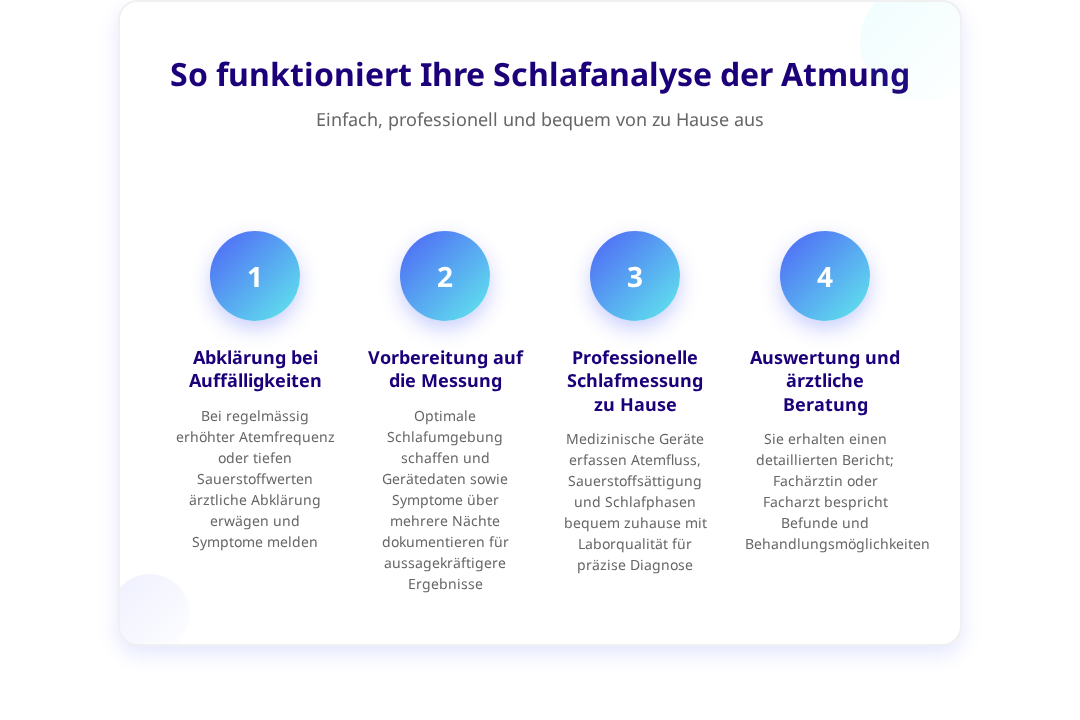
If you regularly notice increased breathing rates or other abnormalities in your sleep measurements, there are several steps you can take. First, you should check your sleep hygiene: Ensure an optimal sleep environment with appropriate temperature and humidity. [5]
A professional sleep analysis can provide you with detailed insights into your nighttime breathing patterns. This involves precisely recording not only your breathing rate, but also other important parameters such as oxygen saturation, airflow, and sleep stages.
Lifestyle adjustments can also help: weight loss if overweight, abstaining from alcohol before bed, and regular physical activity can have a positive effect on sleep quality and breathing. Sleeping position can also be important – sleeping on your side often reduces breathing problems.
Further information on various aspects of sleep can be found in our sleep guide , which offers comprehensive tips and scientifically sound insights.
When to seek medical advice?
Professional sleep diagnostics vs. home monitoring
While consumer wearables can provide a first impression of your sleep patterns, professional sleep diagnostics offer significantly more precise and medically usable data. In a professional sleep study, multiple parameters are recorded simultaneously: airflow, chest and abdominal movements, oxygen saturation, heart rate, and brain activity. [6]
This comprehensive data collection makes it possible to identify complex sleep disorders that might be missed by simple fitness trackers. Especially when sleep apnea or other sleep-related breathing disorders are suspected, precise measurement is crucial for correct diagnosis and treatment.
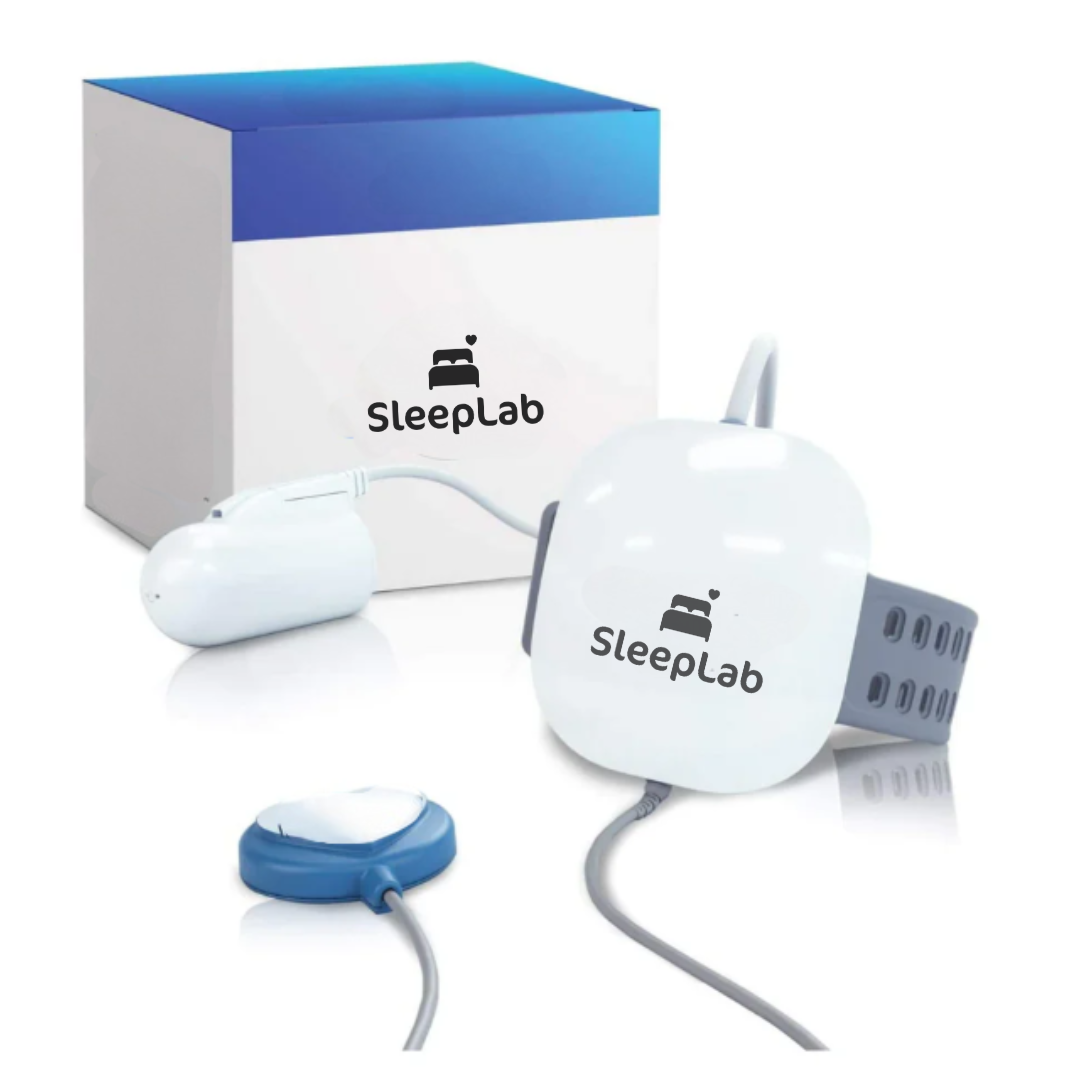
Modern sleep diagnostics can now be conveniently performed at home, without the need for a stay in a sleep lab. Professional home sleep tests use medical devices that achieve lab-like accuracy while offering the comfort of your own bed.
How Sleep Lab can help you
If you experience persistent abnormalities in your breathing rate or other sleep parameters, Sleep Lab offers a modern solution for precise sleep diagnostics from the comfort of your own home. Our medical-grade measuring devices record all key sleep parameters with laboratory-quality results while you sleep in your familiar surroundings.
After the measurement, you will receive a detailed written report analyzing not only your respiratory rate but also oxygen saturation, sleep phases, and other relevant parameters. If needed, a specialist evaluation and a personal consultation with a doctor can clarify the next steps for optimal treatment.
If you have concerns about your nighttime breathing or simply want to learn more about your sleep quality, you can schedule an appointment for a professional sleep analysis . Our experts will guide you on your path to more restful sleep.
Auch wenn Schlafstörungen viele medizinische Ursachen haben, spielt die Schlafunterlage eine nicht zu unterschätzende Rolle für Schlafqualität, Körperregeneration und nächtliche Unruhe. Eine ergonomisch passende Matratze kann Druckpunkte reduzieren, Bewegungen ausgleichen und das Liegeklima verbessern. In unseren unabhängigen Tests haben wir unter anderem die Roviva Matratzen Bewertung, die Philrouge Matratzen Bewertung sowie die Hüsler Nest Matratzen Bewertung detailliert analysiert – mit Fokus auf Unterstützung, Materialqualität und Eignung für unterschiedliche Schlafbedürfnisse.
FAQ
What is a normal breathing rate during sleep?
A normal breathing rate during sleep is between 12 and 16 breaths per minute. This is slower than during the day and can vary slightly between different sleep stages. Values regularly exceeding 20 breaths per minute should be checked by a doctor.
How accurately do fitness trackers measure breathing rate?
Most fitness trackers measure respiratory rate indirectly via heart rate variability, not through direct respiratory flow sensors. This method can provide estimates, but is less precise than medical-grade measuring devices and should not be used for medical decisions.
When should I be concerned about my nighttime breathing rate?
Respiratory rates above 20 breaths per minute are cause for concern, especially when combined with low oxygen levels, frequent awakenings at night, or persistent daytime fatigue. Irregular breathing patterns or prolonged pauses in breathing are also warning signs that should be medically evaluated.
Can environmental factors affect my breathing rate during sleep?
Yes, various environmental factors can affect nighttime breathing. These include poor air quality, unfavorable room temperature, allergens, or an unfavorable sleeping position. Psychological factors such as stress can also affect breathing patterns.
Is professional sleep analysis necessary if my fitness tracker shows abnormalities?
For recurring abnormalities or symptoms such as daytime fatigue and snoring, professional sleep monitoring is recommended. This provides more precise data and can identify sleep disorders that consumer devices might miss. An accurate diagnosis is the basis for effective treatment.